
The Night of Science is a yearly student-organized event at Campus Riedberg offering over 90 lectures, guided tours, booths and more.
It’s free of charge and registration is required only for the guided tours.
Here you can get fascinating information about all aspects of natural and life sciences – and participate in lots of things!
The next NoS is on June 12th 2026 from 5pm to 5am, during which the following talks will be held in English:
18:30 – 19:15, Biologicum 2: Andrew Gallagher – State-of-the-art 3D hydrodynamical modelling of stellar atmospheres (physics)
18:30 – 19:15, MPI Biophysics: Els Kuiper – Autophagy: because powerhouses need a Roomba too (biophysics)
19:45 – 20:30, OSZ H3: Sabine Windmann – What’s so special about consciousness? (psychology)
19:45 – 20:30, OSZ H5: Ryan Sarkar – 2024: A Space Odyssey – The biology of being trapped in space (biology)
19:45 – 20:30, Biologicum 1: Mauro Siragusa – Microproteins: the “dark proteome” unveils its secrets (medicine)
19:45 – 20:30, MPI Biophysics: Saumyak Mukherjee – Biophysics in Computers: Beyond the Physical Laboratory (biophysics)
21:00 – 21:45, Chemie H1: Cristina Ortiz, Nico Landvogt – Tipping Point: why diseased livers suddenly collapse and how cells try to prevent it (medicine)
22:15 – 23:00, Biologicum 2: Giuliano Franchetti – The trapping of highly charged particles in an accelerator (physics)
22:15 – 00:15, OSZ H4: Kavya Gopakumar – Science without borders: life map of a researcher from India to Europe; Lucie Eisen – Fine-tuning molecules: the power of late-stage functionalization; Constantinos Kyriacou – Parallel processing
in a flak: the power of high-throughput screening; Lorenzo Ballerini – Chasing molecules: a research journey through materials science and drug discovery
23:30 – 00:15, OSZ H5: Camilla Juul Hansen – Robotic Telescopes & remote Observations (physics)
00:45 – 01:30, OSZ H5: Mathieu Renard – The Science of Concert Crowds: Why you have never seen a clockwise circle pit (psychology)
00:45 – 01:30, OSZ H6: Sophie Bauchinger – Reaching for the sky – climate science with ballons and aircrafts (climate science)
Notice: information is subject to change, we advise that you check this page shortly before the event for updates.
We’re celebrating our 20th anniversary!
It’s been (almost) 20 years since the first Night of Science on June 29, 2006.
It is only thanks to the commitment of the many teams of students over the years that it has developed into what it is today.
Despite all of the obstacles we have faced over the years, whether the Bologna Process, the pandemic, or speakers canceling at short notice, we are now one of the largest student-organized events of our kind.
But it’s not like we came out of the blue. In response to the planned reintroduction of tuition fees in 2006 and inspired by the ‘Night Learning’ in 2003, the first NoS let lectures take place when you could hear them even though you
had to work: at night.
Over the years, the political context has faded into the background, but our basic ideas and motivation for our volunteer work have remained the same:
Knowledge wants to be free and accessible to all. And we are proud to do our part.
Our 2026 figurehead: Grace Hopper
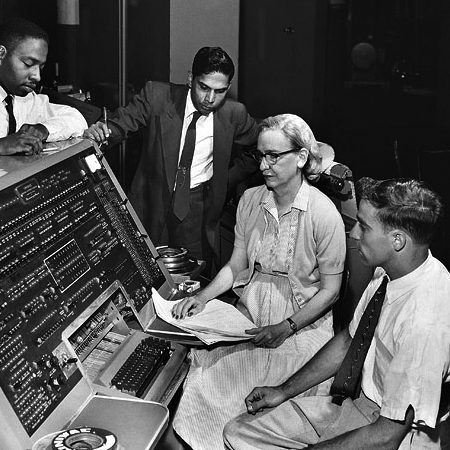
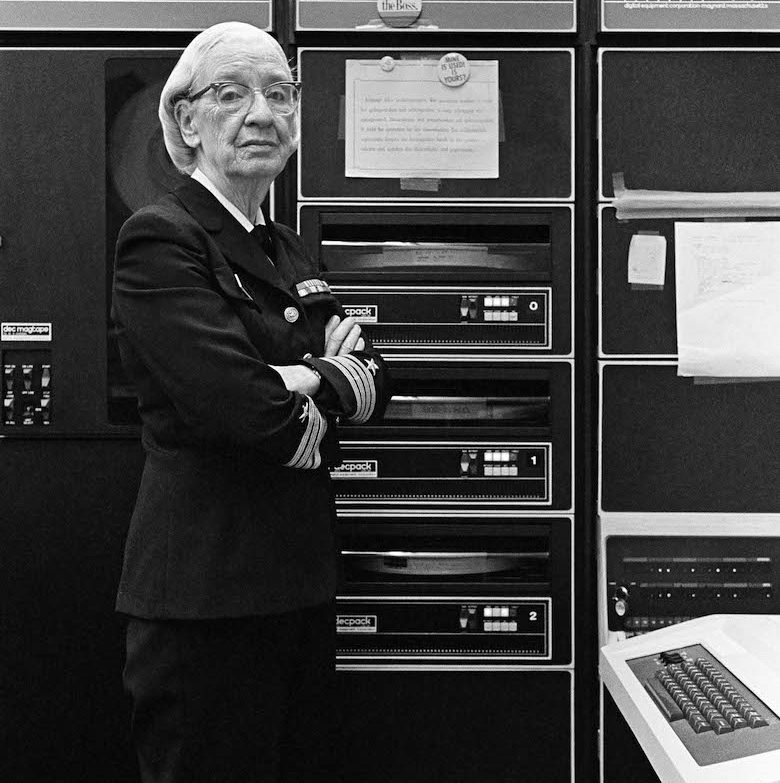
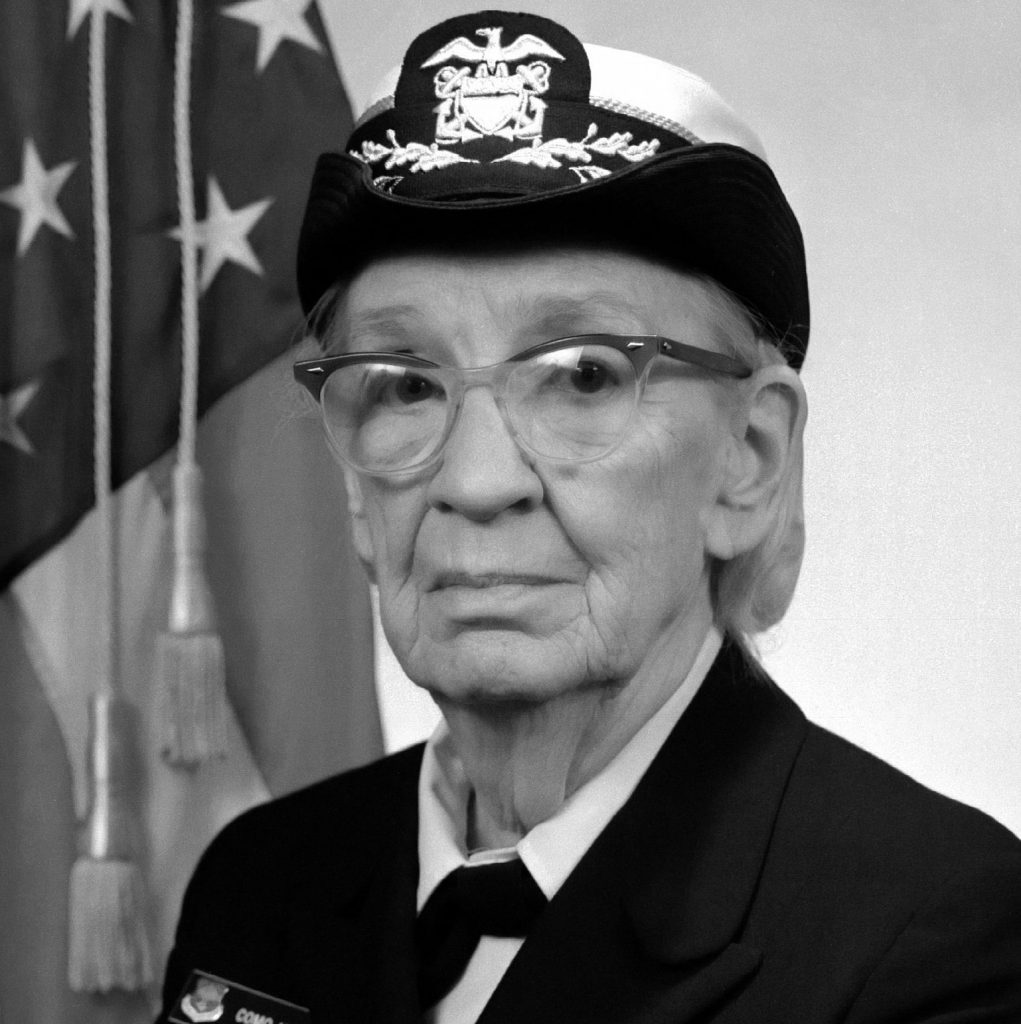
Grace Hopper, born 1906 in New York, was an American computer scientist and mathmatician. She is considered one of the most significant pioneers of computer science.
After getting her PhD at Yale, she joined the Navy during World War II, where she worked on the ‘Harvard Mark I’, one of the first electromechanical computers. Her most important achievement was the development of the first compiler
– a program that translates English terms into machine readable language and thus laid the foundation for modern software engineering. She was also involved in the development of the programming language COBOL, which is used in business
and administration even today.
Despite her groundbreaking work, Hopper didn’t get much acknowledgment at first, since women were severely underrepresented. Today, Grace Hopper is seen as a symbol of innovation and of women in science.